
Have you ever felt like you’re doing all the right things in your marketing yet still not seeing results? You’re posting regularly on social media, attending networking events, maybe even doing those one-on-one coffee chats, but your client roster isn’t growing the way you hoped.
The natural instinct when something isn’t working is to do more of it or to add something new.
But what if I told you that’s often the exact opposite of what you actually need to be doing?
Today, we’re exploring why refining what you’re already doing is far more powerful than adding more tasks to your marketing plate. Business coach Jereshia Hawk made this brilliant point about how true growth isn’t about doing more, it’s about optimizing what already works. I have seen this play out with the financial coaches I’ve worked with time and time again.
The More-Is-Better Trap
Let’s talk about a pattern I see with so many financial coaches. You start marketing your business. Maybe you choose Instagram as your social media platform of choice. You post consistently for a month or two, but you’re not seeing much engagement or getting clients from it. What’s the typical response?
You might think you need to post more. Maybe you need to add LinkedIn or Facebook too. Maybe you need to start a YouTube channel. I’ve seen coaches who are stretched so thin trying to be everywhere that they end up being effective nowhere. Their content quality suffers, their message gets diluted, and they’re exhausted, and they still don’t have the clients they’re looking for.
The same happens with networking. A coach attends a few events, has some one-on-ones that don’t convert to clients, and thinks they need to attend more events and schedule more coffee chats.
Here’s what we’re missing when we fall into this trap: Quantity rarely solves a quality problem.
If your Instagram posts aren’t resonating with your ideal clients, making more of them won’t fix that. If your networking conversations aren’t leading to business, having more of those same types of conversations probably won’t change much either.
What’s happening is we’re mistaking activity for progress. We feel busy. We’re checking boxes, but we’re not actually moving the needle in our business.
The Refinement Mindset
So what’s the alternative to the more-is-better approach? It’s what I call the refinement mindset.
Instead of asking “what else should I be doing,” start asking “how could I make what I’m already doing more effective?”
I’ve worked with coaches who were ready to abandon platforms where they’d already built a small following because they weren’t seeing immediate results. When we looked closer, we realized they weren’t being clear about who they serve, what problem they solve, or what action they wanted people to take.
The refinement mindset is about zooming out and looking at your marketing from a higher vantage point. It’s about identifying which aspects of your marketing actually need improvement, rather than assuming you need to add more tactics.
This approach feels counterintuitive at first. We’re conditioned to think that growth means expansion—more platforms, more content, more networking. But true scaling often means doing fewer things better.
One of the biggest benefits of refinement is that it’s sustainable. Adding more and more marketing activities to your plate is a recipe for burnout. Refining what you’re already doing allows you to grow without sacrificing your well-being.
Think of it like gardening. Sometimes the best way to help a plant thrive isn’t to plant more seeds, but to prune what’s already growing so it can flourish.
Refining Your Social Media Approach
Let’s get practical and talk about how to apply the refinement mindset to social media marketing.
If you’re posting regularly but not seeing engagement or conversions, don’t immediately jump to posting more or adding new platforms. Instead, look at what you’re posting and ask: How can I be more bold? How can I be more clear?
When I say bold, I don’t mean louder or more provocative. I mean more authentically you and more focused on your ideal client’s specific needs.
Look at your last 10 posts and ask: Would my ideal client immediately recognize that I’m talking to them? Would they feel seen and understood?
If you’re unsure, ask a business friend for help. I’ve seen coaches who create beautiful, inspirational content that gets likes but doesn’t convert to clients. Why? Because it’s not specific enough. It doesn’t directly address the pain points their ideal clients are experiencing.
Refining Your Calls to Action
Another important area you can refine is your calls to action. Many coaches are hesitant to be direct about next steps. They’ll post valuable content, but never clearly tell people how to work with them.
For each post you’re reviewing, ask yourself: Am I telling people exactly what to do next? Am I clear about how they can contact me, what the process looks like, or what they can expect?
Sometimes a simple shift from “DM me if you have questions” to “DM me with the word ‘budget’ to receive my free guide to creating a business budget” can make all the difference.
Refining Your Networking Approach
Now let’s talk about refining your networking approach, because this is another area where I see coaches do more without getting better results.
Instead of attending more events or scheduling more one-on-ones, evaluate the quality of the interactions you’re already having.
Think about your most recent networking conversations.
- How confidently did you explain what you do?
- Did you clearly articulate who you help and how?
- Or did you downplay your expertise or get vague when describing your services?
I’ve noticed coaches who attend multiple networking events each week but struggle to convert those connections to clients. It’s often because they’re not being assertive enough in those conversations, or they’re not qualifying potential clients effectively.
Another approach is to reflect on which networking events or one-on-ones have felt most productive.
- What made those different?
- Was it the type of person attending that event?
- The format of the event? The way you showed up?
- Did something change from one event to the next?
Once you identify what worked, you can seek out more of those specific opportunities rather than just increasing your networking hours across the board.
Don’t underestimate the power of follow-up either. Many coaches meet great prospects but then drop the ball on nurturing those relationships. A refined networking strategy includes a systematic approach to staying in touch with promising connections after you’ve made that connection.
Creating Your Learning Loop
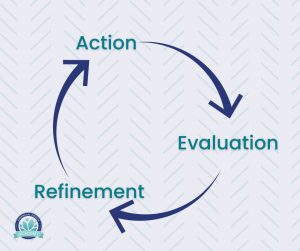
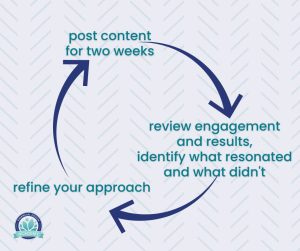
What we’re really talking about here is creating what I call a learning loop for yourself in your marketing. It’s a cycle of action, evaluation, refinement, and then action again. This is where real growth happens in business—not in constantly trying new things, but in getting better at the fundamentals.
A learning loop might look like: post content for two weeks, review engagement and results, identify what resonated and what didn’t, refine your approach and post again with those improvements, and repeat that cycle.
The key is to give each refinement enough time to show results before making more changes.
Marketing is rarely an overnight success story. It’s about consistent improvement over time.
I’ve worked with coaches who completely transformed their results not by changing their marketing strategy, but by committing to this learning loop. They stopped jumping from tactic to tactic and instead became masters of a few key approaches.
This mindset shift from expansion to refinement is often the difference between coaches who struggle for years and those who build thriving practices. The most successful coaches aren’t necessarily doing more marketing activities than you; they’re just being more intentional, more focused, and more willing to refine what they’re already doing.
Your Action Steps
Here are some clear action steps you can take to start refining your marketing approach:
- First, audit your current marketing activities. What are you already doing consistently? Choose one to two key channels to focus on refining before you allow yourself to add anything new.
- For each marketing channel, identify three specific ways you could make it more effective. For social media, this might be clarifying your message, being more direct with calls to action, or posting at different times. For networking, it might be preparing a clear introduction, asking better questions, or improving your follow-up system.
- Commit to a 30-day refinement period. Instead of adding new marketing tactics, focus exclusively on improving what you’re already doing.
Track your results so you can see what’s working. Note not just metrics like followers or likes, but actual business outcomes like discovery calls booked or clients who sign up. - Then schedule regular review sessions with yourself. Set aside time every two weeks to evaluate what’s working and what could be further refined.
Remember, growth at this stage of your business isn’t just about bigger numbers. It’s about learning how to market in a way that feels sustainable and authentic for you.