
Money Made Human™ Advisory Group
For people who want to get better at the work they’ve chosen to do.
This is a year-long professional calibration path for experienced financial coaching practitioners. You’ll train your judgment, sharpen your language, and refine your presence by watching real coaching sessions together and learning to see them more clearly.
This is applied discernment training. The deliverable isn’t insight. The deliverable is judgment.
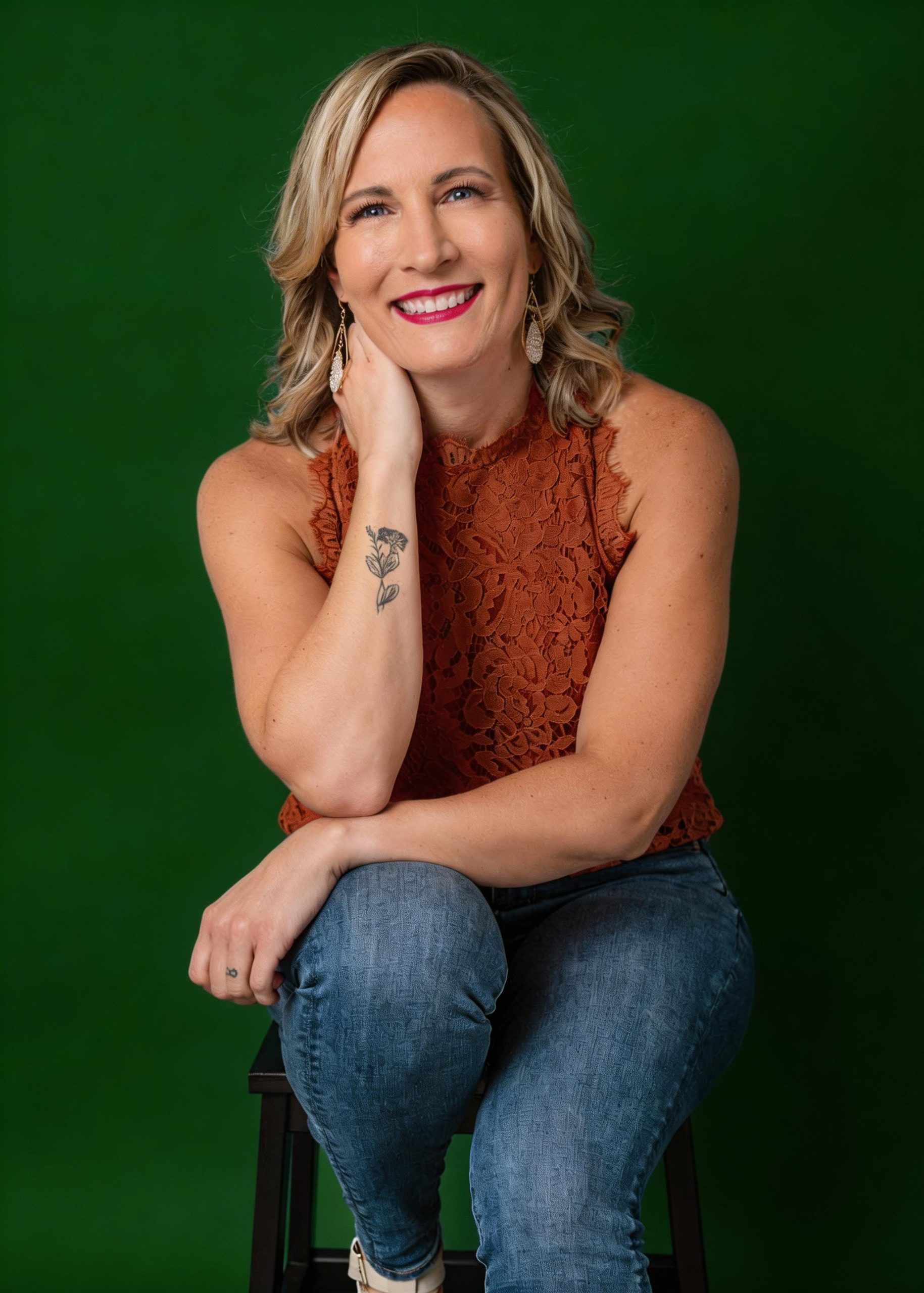
I didn’t design this in a classroom. I discovered it on the ground.
A few years ago, I was brought in to consult with a financial institution that needed to scale from two coaches to 50, and fast. We tried everything: training manuals, curriculum, and scripts. What moved the needle more than any of it was actually simpler: we started watching coaching sessions together. Not grading. Not critiquing. Watching. And then talking about what we saw.
Coaches who had been doing solid work for years started seeing things they’d never noticed. Someone would say “did you catch what happened at minute twelve?” and the whole room would get sharper. It did more in weeks than months of content ever could.
That practice – watching closely, reflecting honestly, calibrating together – is what Money Made Human is built on. But here’s what I learned in that process: the group sharpens everyone’s eyes. My job is to see what they can’t see – yet.
“I care deeply about being excellent at this work, and I can feel where I’m still getting in my own way as a coach. I’m ready to be more intentional, more precise and challenged in how I show up in the room.” – Cathy Lemire
How It Works


About Kelsa
I’ve spent nearly two decades coaching clients, training financial professionals, and building the SpendFirst™ methodology. I’ve watched hundreds of coaching sessions and I’ve built a framework for seeing what most people miss.
This group is where I share that framework and help serious professionals develop the same eyes.
My role in this group: I review every session with the same depth and rigor I’d bring to a private consultation. I document what I see. I prepare a full evaluation. And then I go last – deliberately. I let the group sharpen their discernment first, because that’s part of the training. Then I land the plane: connecting patterns across what the group observed, naming what was missed, and giving direct, specific feedback on the coaching. Going last is a teaching choice, not a passive one. It means that by the time I speak, the room has already done real work – and what I add builds on that foundation rather than replacing it.
This is the founding cohort. You’re not joining something that’s been running for years. You’re helping build it. That’s not for everyone, but if it’s for you, you already know.
Questions? Contact us at info@financialcoachacademy.com.
Frequently Asked Questions
Yes. If you’re currently in the Mastermind and want to transition to Money Made Human, we’ll credit your remaining Mastermind time toward your Money Made Human enrollment
The Mastermind is closing at the end of September 2026. If you’re interested in MMH, reach out to info@financialcoachacademy.com and we’ll walk you through your options.
Most masterminds are built around conversation: you share what’s going on, get feedback, and leave with ideas.
MMH is built around observation: every month, the group watches a real coaching session together. Everyone prepares structured observations using the Shared Observation Framework before we meet.
Then we come together and calibrate: sharpening your ability to see what matters, name what you’re noticing, and understand the choices underneath the coaching.
Kelsa reviews every session independently and delivers a full evaluation during the discussion. The goal isn’t advice or encouragement. It’s judgment you can take back to your very next session.
One thing people don’t expect: the level of trust and mutual respect that forms when a group commits to watching each other’s work this honestly. It’s not something we manufacture. It just happens when serious professionals show up for each other at this level.
If you’re nervous, that’s normal. If you’re terrified, you’re not ready yet.
Here’s the distinction: MMH is built on the assumption that everyone in the group is competent and doing good work. We’re not here to grade you or tear you apart. We’re here to help you see what you can’t see on your own.
If submitting a session feels energizing (even if it’s nerve-wracking), you’re ready. If it feels threatening, like something you couldn’t handle, you’re not.
The question to ask yourself: Does this feel like growth or does it feel like danger?
If it’s growth, apply. If it’s danger, give yourself more time and know that we’ll be here when you’re ready.
No. You don’t need a specific certification or credential.
What you do need:
- Experience. You’ve been coaching for at least 1-2 years and have real client sessions under your belt.
- Competence. You’re already doing good work. You’re not looking for someone to teach you how to coach. You’re looking to get sharper.
- Readiness for peer review. Submitting a session for the group to watch feels challenging but valuable, not threatening.
If you’ve been through one of my programs (Mastermind, CCC, FCA, Essentials, or Toolkits), you’ll hear about MMH first. But it’s not a requirement.
The framework works across niches.
Whether you’re coaching corporate clients on employee benefits, working parents on cash flow, or retirees on spending in retirement, the principles of good coaching are the same. Presence, language precision, client agency, session architecture: these apply everywhere.
In fact, watching sessions outside your niche often sharpens your thinking more than watching sessions that look exactly like yours. You see patterns you wouldn’t have noticed otherwise.
Yes. They serve different needs.
MMH sharpens your coaching craft. SAP supports your business strategy. Some practitioners need both.
Total investment if doing both: $22,000/year ($10K MMH + $12K SAP)
Time commitment if doing both:
The live commitment is about 150 minutes per month: a 90-minute MMH group session and a 60-minute SAP call.
But both programs ask more of you than just showing up to calls. In MMH, you’re watching a full coaching session on your own time, preparing observations, and thinking critically about what you saw (all part of your training). Plan for 3 to 4 additional hours per month. In SAP, the real value happens between calls – implementing what we discussed, making decisions, moving things forward in your business.
The practitioners who do both tend to be the ones who are serious about getting better at the work and intentional about building the business around it. If that’s you, both doors are open.
If you’re not sure whether you need both, schedule a consultation and we’ll talk through it.
| MMH Advisory Group | Strategic Advisory Partnership | |
|---|---|---|
| Focus | Coaching craft development | Business strategy |
| Format | Monthly 90-min group session reviewing real coaching sessions | Monthly 60-min 1:1 call with Kelsa + Voxer access |
| What you’re working on | Presence, language precision, session architecture, client agency, reading non-verbals | Offer design, pricing, scaling, hiring, positioning, marketing |
| Deliverable | Sharper judgment through peer calibration | Strategic clarity on business decisions |
| Commitment | 12 months (miss max 2 sessions) | Month-to-month (cancel anytime) |
| Investment | $10,000/year or $2,500/quarter | $1,000/month |
| Group size | 11 practitioners | 1:1 with Kelsa |
Bottom line: MMH is for getting better at the work itself. SAP is for building and scaling your business. Some practitioners do both. Personally, I love both sides of this work (the craft and the business) and I’d be honored to be part of either journey with you.
Once inside your advisory group, you can miss up to 2 sessions in the 12-month period. Beyond that, it affects the group.
If you know in advance you’ll need to miss more than 2 sessions (sabbatical, major life event, etc.), this isn’t the right year for you. Wait until you can commit.
Yes. Kelsa watches every submitted session independently and prepares a thorough evaluation before the group meets. You’ll receive direct feedback from Kelsa on your coaching – not just what to work on, but what you’re doing that’s distinctive and worth protecting. You’ll also receive the full benefit of the group’s observations, which surface things no single person would catch alone. The combination is what makes this different from anything else available.
If you’re looking for 1:1 strategic guidance on your business, that’s what Strategic Advisory Partnership is for.
This is a 12-month commitment with 10 other practitioners. Chemistry matters.
Here’s what we’re doing to get this right:
- Careful curation. I’m personally reviewing every application and selecting people who are ready for this level of rigor and vulnerability.
- Month 1 orientation. We spend the first month training the way of being in the group, how to observe, how to give feedback, how to hold multiple truths at once. This builds the culture.
- Shared Observation Framework. Everyone’s using the same evaluative lens, which creates consistency and reduces subjective judgment.
That said: If you join and it’s genuinely not working for you, we’ll talk. But this isn’t a “try it for a month and bail” program. The commitment matters.
Yes. You can pay annually ($10,000), quarterly ($2,500 x 4), or monthly ($835 x 12). No upcharge on payment plans. The investment is the same regardless of how you pay.
Founding cohort: Orientation session is May 13th, 2026, with a small amount of pre-work to be completed prior to that session.
Monthly sessions are the 2nd Wednesday of every month for 12 months.
If you’re not accepted, you’ll receive an email explaining why and pointing you toward what I think would be a better fit (Essentials, Strategic Advisory Partnership, SpendFirst Certification when it launches, etc.).
If all 11 spots are filled and you’re a strong fit, you’ll be added to the waitlist for the next cohort.
Yes, as long as you can attend the monthly 90-minute sessions live. Sessions will be scheduled during US business hours, so consider time zones.